Competitive Online Games Have Redefined Player Expectations for Instant Rewards
Modern gaming didn't just change how people spend their leisure time — it fundamentally rewired what players expect from digital experiences. The feedback loops built into MMOs and competitive titles have made instant gratification not a luxury but a baseline requirement. If a system doesn't respond quickly, players disengage.
This shift didn't happen overnight. Decades of iterative design, from early dungeon crawlers to sophisticated live-service MMOs, have progressively shortened the gap between player action and meaningful reward. Today, that expectation has spread well beyond gaming itself, influencing how digital platforms of every kind are designed to deliver satisfaction.
MMOs Pioneered the Instant Gratification Loop
World of Warcraft, EverQuest, and their successors didn't just sell subscriptions — they sold the feeling of constant progress. Every quest completion, boss kill, and crafted item delivered an immediate dopamine hit. Developers learned early that frequent, small rewards kept players logged in far longer than rare, large ones.
This philosophy became foundational. Battle passes, daily login bonuses, and loot chest animations all trace their design DNA back to the MMO progression model. The core principle is simple: never let a player go more than a few minutes without a tangible signal that their time investment was worthwhile.
Fast Payouts Across Digital Platforms Follow the Same Logic
The psychology that keeps players glued to MMO reward loops doesn’t stay contained within games. It has migrated into other digital spaces, including mobile gaming, esports platforms, and fantasy sports apps, all of which rely on fast feedback, visual reinforcement, and minimal friction between action and outcome. Console action titles also show how instant rewards and seamless in‑game purchases drive satisfaction. Online casinos have adopted nearly identical principles, with dedicated resources covering fast‑payout online casinos providing a useful overview of how this model operates in practice (source: https://www.cardplayer.com/online-casinos/fast-payout-casinos).
Reward Speed Now Shapes Player Retention Rates
Live-service design has taken MMO reward logic and accelerated it. Today's competitive titles ship with seasonal ranked ladders, time-limited events, and daily challenge systems engineered to deliver reward milestones on a near-hourly basis. Retention metrics in modern games are directly tied to how frequently players receive meaningful feedback.
The market data reflects this clearly. The global MMORPG market was valued at USD 5.35 billion in 2024, with over 1.2 billion players worldwide participating in MMORPG-style experiences, according to MMORPG market research. That scale means a significant portion of the global gaming audience has been conditioned by the same reward architecture — one built on speed, frequency, and variable reinforcement.
Esports Has Pushed Instant Feedback Into Mainstream Gaming
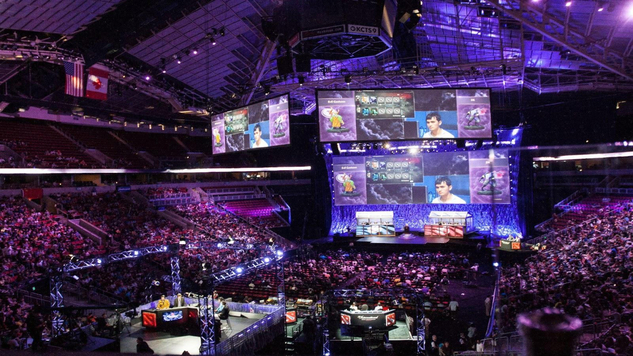
Competitive esports has amplified the instant-reward model at a cultural level. Spectators watching high-stakes League of Legends matches or CS2 tournaments experience vicarious feedback loops — every teamfight, clutch play, and elimination delivers a surge of engagement that mirrors the in-game reward systems players feel firsthand. Broadcast design, complete with highlight reels, play-of-the-game moments, and real-time statistics, is deliberately engineered around the same short-loop logic.
For the in-game economy, the numbers tell a compelling story. The global market for in-game gambling mechanics and loot boxes is projected to grow from USD 22.7 billion in 2025 to USD 36.2 billion by 2032, according to Persistence Market Research, driven by player demand for personalized, instant virtual rewards. Esports organizations and publishers have embraced this model enthusiastically, layering cosmetic drops, viewer rewards, and sponsored in-game events onto competitive broadcasts to keep both players and audiences in a near-constant state of anticipation and resolution.
The broader implication for the gaming industry is significant. As personalization technology and AI-driven content systems mature, reward loops will become tighter and more responsive to individual player behavior. For MMO and competitive gamers, this trajectory means future titles will offer even fewer moments of downtime between meaningful feedback events — making the instant-reward expectation not just a preference, but a permanent feature of the digital landscape.
To read the latest guides, news, and features you can visit our Other Game Page.