What Gamers Can Learn from Slot Game Design
Anyone who has opened a loot box, pulled on a gacha banner, or watched a rarity color flash across the screen has already met slot machine design. Video games have borrowed heavily from the casino floor over the past two decades, and understanding where those mechanics came from makes it easier to enjoy games without being steered by them.
Reward Loops Gamers Already Know
The core of a slot machine is a variable reward. A spin might pay nothing, a little, or a lot, and the player never knows which. Psychologists call this a variable ratio schedule of reinforcement, and since B.F. Skinner's experiments in the mid-twentieth century, it has been known as one of the most effective ways to keep a behavior going, because the next reward always might be one action away.
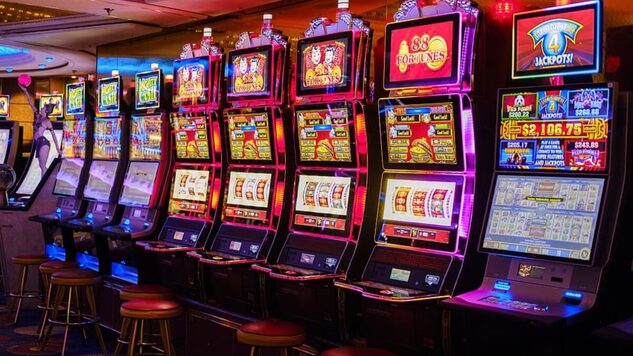
Spin a few crypto slots and the structure becomes obvious, with short rounds, instant feedback, frequent small wins and rare large ones. Modern slots layer on bonus meters that fill gradually, collectible symbols and multi-stage features, all of which game designers will recognize from their own progression systems.
The same loop powers random drops in role-playing games, card packs in sports titles and daily reward chests in mobile games. Players who recognize the pattern can ask a simple question whenever they feel the pull to continue, whether they are enjoying the game itself or just waiting for the next reveal.
The Slot DNA Inside Loot Boxes
Loot boxes are the clearest case of casino design crossing into mainstream gaming. The idea came from capsule toy machines and spread through mobile games, with Puzzle & Dragons becoming the first mobile game to earn more than $1 billion from its gacha model.
The same mechanics eventually became widespread across mainstream gaming, appearing in collectible card packs, randomized cosmetic rewards, and character acquisition systems. These features give players a chance to obtain different items without knowing exactly what they will receive.
Some games add a pity timer, which raises the chance of a rare item after several unsuccessful openings. This mechanic gives players a clearer progression path within an otherwise random system and is something slot designers would recognize as a way to manage frustration.
The Wikipedia article on loot boxes traces the first known example to a gachapon ticket introduced in the Japanese version of MapleStory in June 2004. It also describes how loot box interfaces often resemble slot machines or roulette wheels, with shaking boxes, color-coded rarity reveals, and celebratory sounds designed to heighten the moment of opening.
Juice, Feedback and the Art of the Reveal
Game designers use the word juice to describe the extra feedback that makes an action feel satisfying: screen shake, particle effects, rising pitch, and bouncing numbers. Slot studios are masters of juice. A win as small as half the stake can trigger coins, flashing lights, and a short fanfare, which makes the moment feel larger than the payout.
Anticipation is the other technique gamers will recognize. When two bonus symbols land, the remaining reels slow down and glow, stretching the reveal. Loot box openings and gacha pulls use the same trick, holding the rarity color back for a beat before showing it. Knowing that the drama is designed, not meaningful, makes it easier to enjoy the show without reading anything into it.
There is a legitimate design lesson here for developers too. Juice works in any genre, from a puzzle game's satisfying click to a platformer's landing dust, and slot studios have spent decades refining it through testing on millions of players. The ethical line falls where feedback misrepresents the outcome, such as celebrating a net loss, rather than where it simply makes a real success feel good.
Transparency Is Where Slots Can Teach Games
Regulated slots carry one feature many video game systems still lack: a published return to player. A slot rated at 96% tells players, in plain numbers, how much it returns over the long run. Crypto casino originals often go further, publishing their house edge and letting players verify each result with provably fair tools.
Video games have been slower to adopt that openness. China began requiring publishers to disclose loot box odds in 2017, and Apple added a similar requirement for apps on its store the same year, yet disclosure in many games is still buried in menus or expressed only as rarity percentages. Players can push for clearer odds by favoring games that show them up front.
Disclosed odds are only useful if they are understood. A 0.6% chance of a legendary item sounds small, yet many players underestimate how many attempts it implies, roughly 115 openings for an even chance of at least one success. Running that calculation before spending turns an abstract percentage into a clear price.
Playing Both With Your Eyes Open
The most useful habit gamers can take from studying slot design is a budget. Consoles, app stores, and PC platforms all offer spending limits, and setting a monthly cap on in-game purchases works exactly like a casino deposit limit. Parents can apply the same controls to children's accounts, since many random reward systems are aimed at younger players who cannot legally gamble.
Premium currencies are worth converting back into real money before any purchase. Games often sell gems or coins in bundles that never match item prices exactly, leaving leftover balances that encourage another top-up. Knowing the dollar cost of each attempt cuts through that fog.
Recognizing the shared design language does not have to spoil the fun. A well-made slot and a well-made loot system are both pieces of craft, built by people who understand attention and reward very well. Seeing the craft clearly lets players decide for themselves when they are enjoying a game and when the game is simply working on them. Real-money slots are for adults only, and the same clear-eyed approach applies whichever screen the reels happen to be on.
To read the latest guides, news, and features you can visit our Other Game Page.