What Makes a Game Easy to Watch and Understand

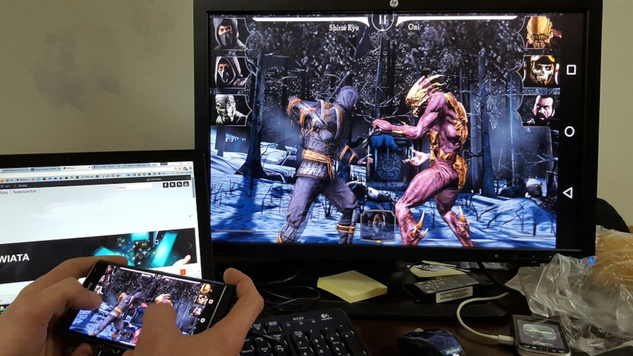
A veteran player can glance at a crowded boss fight and know who is in danger, which attack is coming, and whether the group is recovering. A newcomer may see only flashing effects and health bars moving without an obvious pattern. The difference is learned context. The experienced player already knows which signals matter and ignores the rest. Spectator-friendly game design makes the game clear enough for a new observer to identify the current state, the immediate objective, the order of events, and the result.
A Game Developer discussion of Overwatch separated accessibility for players from readability for spectators. Its writers argued that viewers need to understand team action and tactics, while commentary can compensate for only part of the confusion. That distinction applies far beyond esports, especially in fast team-based games. Playability asks whether the person holding the controls can make meaningful decisions. Watchability asks whether somebody without that control, and without the same stored knowledge, can follow what those decisions are responding to.
The Four Signals a Viewer Needs
Watchability depends on whether the game communicates its logic in the order a viewer needs it. Before someone can understand a decisive move, they must know the situation leading into it, what the players are trying to achieve, and how one action produces the next. This creates a simple chain of information that applies across raids, competitive matches, turn-based games, and real-time rounds. Breaking that chain into four signals makes it easier to identify where comprehension succeeds or fails.
The first requirement is state: what is true at this moment? The second is objective: what immediate event is being resolved? The third is sequence, which asks whose action matters next, while the fourth is resolution, which focuses on making the resulting outcome clear.
These signals also matter when watching forms part of participation. During a live casino round at Lucky Rebel, for example, the players have to recognize the present state, understand what the round is deciding, follow the visible order of events, and identify when the result has been settled. This doesn’t mean you have to treat every game as an esport. Instead, ask whether the relevant facts arrive early enough to make the sequence intelligible.
A clear result cannot repair an earlier action window that made no sense, just as an obvious objective cannot help when the viewer cannot tell whose turn or response is currently relevant. State, objective, sequence, and resolution describe the information task rather than the style used to present it. This is true across games of all kinds, whether you’re playing on Lucky Rebel or joining one of the biggest esports.
A quick 20-second test makes those four signals practical. Watch a short clip without commentary, then check each stage:
- State
- Pause at the start.
- Can you explain what is happening right now?
- If not, the later actions may appear arbitrary.
- Objective
- Identify the first meaningful action.
- Can you tell what the player or team is trying to accomplish?
- If not, success and failure have no clear meaning.
- Sequence
- Follow the exchange as it unfolds.
- Can you connect each action with the response or consequence that follows?
- If not, the event becomes movement without understandable cause and effect.
- Resolution
- Stop at the end of the clip.
- Can you explain what changed in one sentence?
- If not, the moment feels unfinished even when the game has technically produced a result.
You can apply this to any game that you feel unsure about. Imagine you’re watching somebody play poker at a casino platform. You can see their hands, the cards on the table, and the other players’ actions, but can you explain what is happening from moment to moment, or why they are making certain decisions? What about if you watch someone play blackjack? Being able to grasp how the game is unfolding and what that means is key to understanding whether someone is playing well and what their chances of winning are.
Familiarity Can Hide Missing Information
Experienced players often supply absent information from memory. MMO veterans recognize ability animations, map positions, sound cues, cooldown timing, and common tactical patterns before a new viewer even knows those details are relevant. A fighting-game player may notice spacing and resource pressure that look like inactivity to somebody unfamiliar with the matchup. A poker player may spot a betting pattern from an otherwise unreadable opponent.
The game therefore appears clearer to its regular audience than to newcomers. Removing commentary and prior knowledge reveals which parts of the event are communicated on the screen, and which parts survive only because the observer already understands the rules.
Timing matters as much as visibility. A cue can be accurate and still arrive too late. Showing an effect after the decision window has closed explains the result, but not the choice that preceded it. Covering the screen with labels can fail in the opposite direction by making every fact equally prominent. Readability depends on selection: the viewer needs the right state information before the next action, and then a clear consequence once that action resolves. Extra detail should deepen their understanding after that chain is secure, not compete with it.
Complexity Is Not the Problem
A watchable game does not have to be mechanically simple. Chess has a huge decision space, yet the pieces, board state, and legal movement rules remain available for inspection. Blackjack uses universally recognized cards and a very straightforward ruleset (barring any sidebets or variants), yet its strategies are immensely complex and vary according to how many decks are in play, making it infinitely watchable. A complex raid can also be readable when threats are distinct, action order is signaled, and consequences remain visible long enough to register.
Conversely, a game with few rules can be difficult to watch if vital information flashes briefly, appears without context, or is understood only by the person holding the controls.
Spectacle is another separate quality. Large effects, dramatic camera movement, and rapid action may make a clip exciting, but excitement does not explain what caused the turning point. Readability preserves the chain between state, decision, action, and consequence. Presentation can emphasize that chain or bury it.
Watching Is Its Own Form of Participation
Viewing should not be treated as a minor afterthought. A 2026 Frontiers survey of 675 Chinese game users aged 18 to 45 found that movement between playing and watching esports streams was not a simple, one-way replacement. Respondents could combine both activities or shift between them according to available time, interests, life stage, and content quality. The study was cross-sectional and self-reported, with limited cross-cultural reach, so it cannot establish a universal progression, but it does support treating viewing as a distinct way of engaging with games, rather than a reduced form of the same activity.
The useful approach is to ask whether a new observer can follow one short event without expert help. When state, objective, sequence, and resolution are visible in time, deeper knowledge can add strategy and meaning. When one is missing, expertise must first reconstruct the basic story of what happened.
To read the latest guides, news, and features you can visit our Other Game Page.